Industry
Industry
Cold plasma and plasma-activated water (PAW) open a new chapter in water treatment and industrial system protection technologies. These solutions combine high efficiency with full environmental safety - no chemicals, no secondary waste, and minimal energy consumption.
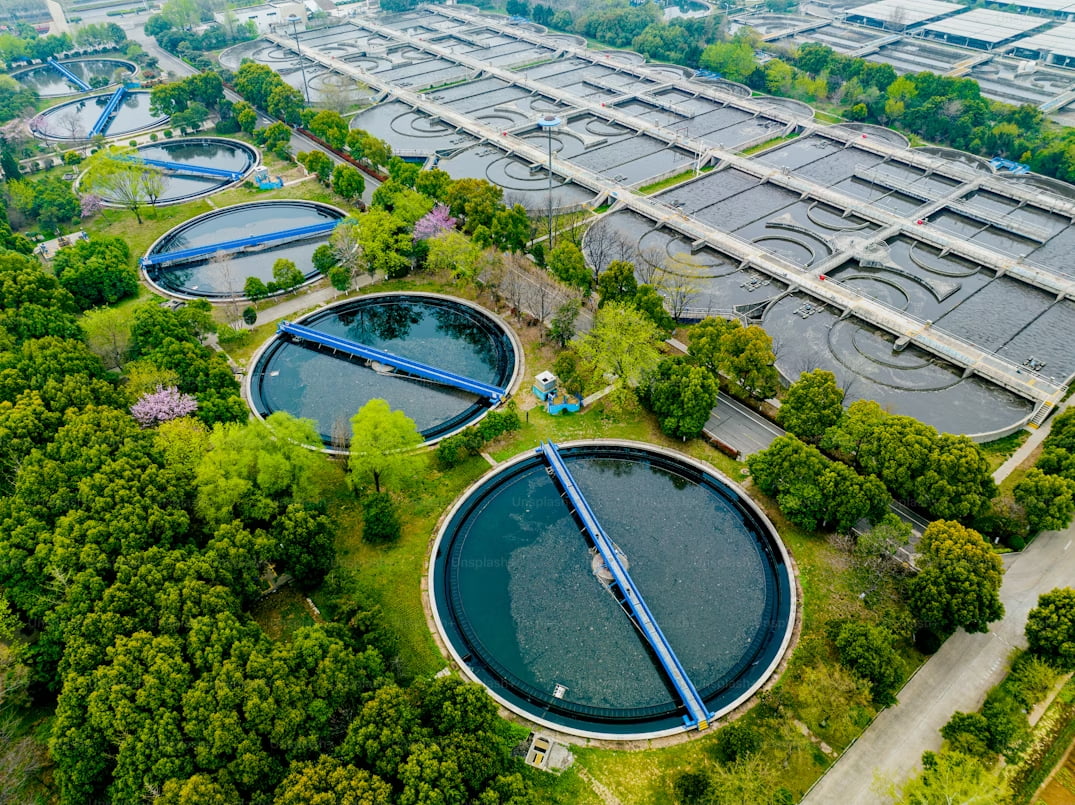
Water and Wastewater Treatment
The use of plasma-activated water (PAW) in water treatment and wastewater facilities offers a modern alternative to traditional chemical methods. It harnesses physical processes to disinfect, remove contaminants, and improve water quality - without chemical reagents or secondary waste.
Odor and volatile gas neutralization: PAW oxidizes H₂S, ammonia (NH₃), methanethiol (CH₃SH), and other organic compounds responsible for unpleasant odors.
Microorganism removal: Reactive oxygen and nitrogen species (RONS) destroy bacteria, viruses, and fungi without the risk of microbial resistance.
Degradation of organic compounds: Breakdown of pesticides, pharmaceuticals, dyes, and surfactants in water and wastewater.
Coagulation and filtration support: Active particles accelerate sedimentation and enhance filtration efficiency.
Environmental benefit: No chemicals, no secondary waste, and low energy consumption.
Effect: Cleaner water, reduced chemical use, lower operating costs, and full compliance with circular economy principles.
Energy and Heavy Industry
Plasma-activated water (PAW) has broad applications in the energy, refinery, metallurgy, and chemical industries. In these sectors, it plays a key role in maintaining clean water circuits, protecting infrastructure, and increasing process efficiency.
Corrosion protection: Neutralization of aggressive gases (H₂S, NH₃) and reduction of biological load in cooling systems, pipelines, and tanks.
Removal of organic compounds: Breakdown of hydrocarbons, oils, and lubricants present in industrial wastewater.
Improvement of process water quality: Reduction of biofilm and deposits, increasing heat exchanger performance.
Reduction of chemical agents: Lower use of biocides, corrosion inhibitors, and detergents.
Operation in demanding environments: Technology resistant to variable operating parameters and high process loads.
Effect: Cleaner water systems, reduced failure risk, lower maintenance costs, and longer infrastructure lifespan.
Cosmetology and Aesthetic Medicine
Plasma-activated water (PAW) is used in modern cosmetology, dermatology, and aesthetic medicine as a natural, safe, and effective agent with antiseptic, regenerative, and anti-inflammatory properties. Thanks to reactive oxygen and nitrogen species (RONS), it supports skin repair processes, enhances ingredient absorption, and assists in treating various dermatological conditions.
Disinfection and sterilization of skin surface: Effectively removes bacteria, fungi, and viruses without irritating the epidermis.
Regeneration support: Active molecules stimulate microcirculation and cell renewal, aiding recovery after laser treatments, mesotherapy, or peels.
Inflammation reduction: Reduces redness, irritation, and acne lesions by regulating the skin microbiome.
Anti-aging therapy support: Improves oxygenation and cellular metabolism, enhancing skin elasticity and firmness.
Safety and purity: Free from chemicals, alcohol, and preservatives; water returns to H₂O and O₂ after reaction completion.
Effect: Cleaner, healthier, and faster-regenerating skin, improved post-treatment comfort, and visibly enhanced cosmetic therapy results.
Summary
Plasma-activated water (PAW) technology is applied across key sectors of the modern economy:
Water and wastewater treatment
Energy and heavy industry
Agriculture and storage
Cosmetology and aesthetic medicine
It is a clean, safe, and energy-efficient technology of the future - combining science, biology, and engineering into a unified system that enhances quality of life and the environment.